Maya Auchincloss, 25, has never been one to sit still. She was an active child who ran cross-country and danced.
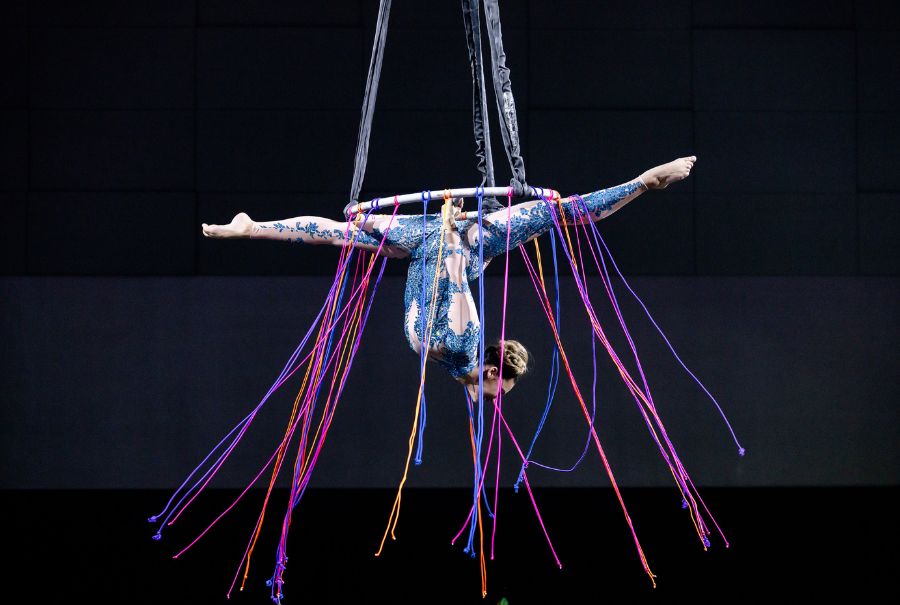
As an adult, she discovered aerial circus performance. She immediately connected to this environment, with its blend of artistry, athleticism and discipline. The practice demands exceptional endurance and skill, and Maya committed to a rigorous training schedule to develop the physical ability the work requires.
In the air, she moves with strength and confidence. But on the ground, for almost all of her life, Maya has lived with pain.
“It feels like my foot’s been stuck in a bonfire,” she says. “Like it’s burning and I just can’t pull it out.” She has spent years navigating surgeries, rare diagnoses and a health-care system that did not always listen.
But it was not only the physical pain that took a toll on Maya — it was the uncertainty, the dismissal. And the invisible emotional weight of living in a body that would not cooperate.
It was not until she was referred to University Health Network’s (UHN) Mental Health in Medicine Clinic at Toronto General Hospital that Maya felt, for the first time, that someone was listening to her whole story.
The long road to a diagnosis
Maya’s ankle pain began when she was eight. “When you’re eight and in pain, you don’t really have the language to explain what is happening,” she says.
After months of persistent pain, a small lump was discovered in her ankle and diagnosed as a benign fibroma. At age 10, she underwent invasive surgery to remove the tumour, along with surrounding tissue and part of the bone, requiring a skin graft. She spent eight days in hospital, and recovery stretched on for months. She was in a cast, used a wheelchair and had limited mobility while undergoing physiotherapy.
For a time, the pain eased. But as a teenager, it returned, sharper and more disruptive.
By 18, the pain was constant, radiating up her leg. She struggled to concentrate, to sleep and, at times, to stand for long periods. Yet when she described the intensity of what she was feeling, her doctor told her she could not possibly be in that much pain because she was still functioning.
She left appointments confused and ashamed, questioning her own experience. She sought a second opinion, hoping for a fresh perspective. Instead, the physician deferred to the original assessment without examining her.
Eventually, with the support of her family, she found a surgeon who took her concerns seriously. Further testing led to a cancer diagnosis and a referral to UHN’s Princess Margaret Cancer Centre for specialized care. There, she was diagnosed with a malignant glomus tumour, a rare and locally aggressive tumour that often presents as a deep, painful mass.
At the Princess Margaret, she learned just how rare her diagnosis was. “In a department of rare cancers, we never see yours,” her oncologist told her.
Over the next several years, Maya underwent surgeries, physiotherapy, scans and pain interventions. Alongside her cancer journey, Maya was also diagnosed with Ehlers-Danlos syndrome, a connective tissue disorder that helped explain years of unexplained symptoms.
Even as answers began to emerge, the emotional toll of living with chronic, unpredictable pain was profound.
The critical role of integrated care
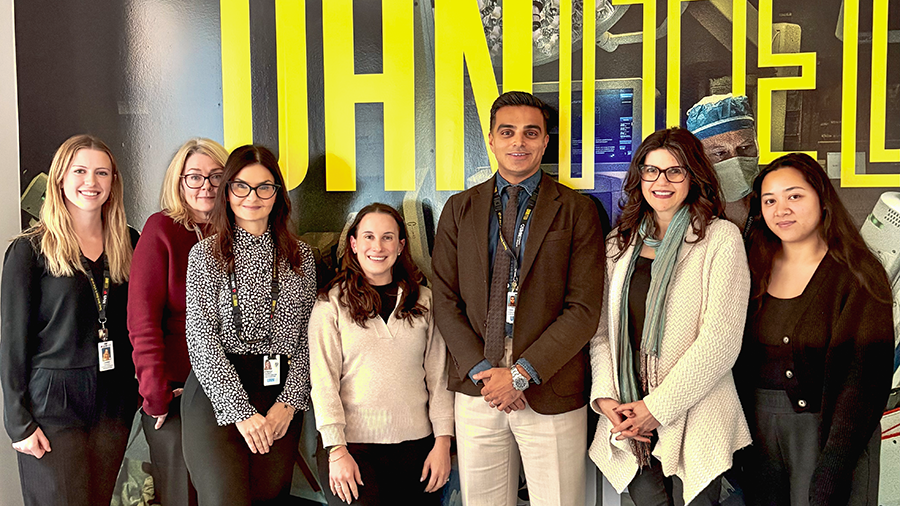
UHN’s Mental Health in Medicine Clinic was created to bridge a gap many patients with complex illness experience: the divide between physical and mental health care. The clinic brings psychiatry, psychotherapy and social work together in one coordinated model, recognizing that serious medical conditions often carry significant emotional and psychological impact.
For young adults in particular, that gap can widen during the transition from pediatric to adult services. To address this, the clinic established the Transitional Age Youth (TAY) Program in partnership with Youth Wellness Hubs Ontario (YWHO), supporting patients aged 18 to 25 who are navigating both complex physical illness and mental health challenges.
Maya was referred to the clinic and enrolled in the TAY Program.
“Many of the young people we see are managing serious medical conditions at the same time as anxiety, depression or trauma,” says Dr. Sarah Bush, medical lead, Mental Health in Medicine Clinic. “If we treat those in silos, we miss the bigger picture. Our role is to address the whole person, not just one part of their care.”
Maya agreed to try it, but she was skeptical. “Anxiety and depression have been part of my life. I’ve done years of therapy,” she says. “I know the coping tools. I know the strategies.”
What she found in the TAY program was different.
At the clinic, she worked with mental health clinician Charlotte Fowlow to better understand the connection between chronic pain, medical trauma and anxiety.
“It was the most meaningful therapy I’ve ever had,” Maya says. “My pain was acknowledged, and so was the toll it had taken on my mental health and day-to-day life. That clear connection between what I was experiencing physically and what I was carrying internally made a profound difference.”

Through the TAY Program, a dedicated clinician supports transitional age youth from referral onward, helping coordinate care within the hospital and, when needed, transition to community-based supports through Youth Wellness Hubs Ontario. A structured referral pathway helps ensure young people do not fall through the gaps as they move between hospital and community care.
“For many young people, the health-care system is overwhelming,” says Fowlow. “Part of my role is to make sure they do not have to carry that alone. We help them understand what is happening medically, process the emotional impact and plan next steps in a way that feels manageable.”
This integrated approach exists because of philanthropy. Through the generous support of the Slaight Family Foundation, the Mental Health in Medicine Clinic now has the dedicated mental health clinician role, expanded social work capacity and new coordinated referral pathways and outcome tracking.
Programs like this require investment to design new models of care, hire specialized staff and create bridges between hospital and community services. Donor support has allowed the clinic to respond to what young adults like Maya actually need.
For Maya, the impact was tangible.
“It wasn’t about pretending the pain wasn’t there,” she says. “It was about learning how to live with it without letting it define every part of me.
A challenging decision for a better future
Throughout all of this, Maya has found joy in performing and coaching.
“I love my job,” she says. “It’s been hard to keep up as before, but I’ve found ways to adapt and keep doing what I love. I’m also incredibly grateful for the support of my team. They’ve been flexible and understanding, which has made it possible for me to keep showing up and doing the work that means so much to me.”
Despite multiple treatments, Maya continues to live with significant pain. Even simple things like walking or wearing socks can feel unbearable. In June of this year, her doctors performed another surgery in hopes of finally addressing the source of her chronic pain. Unfortunately, it was not successful.
After years of trial and error, Maya reached a point where nearly all her energy was being spent managing pain.
Earlier in her journey, when options were running out, she first raised the idea of amputation with her care team. At the time, it came after years of searching for relief, when the physical and emotional toll felt overwhelming.
Now, it is part of a thoughtful plan. After exhausting every available option, Maya has decided to move forward with an amputation in fall 2026. With the support of her medical team and community, she has chosen the path that offers the clearest chance at meaningful relief and improved mobility.
Her work with the care team at the Mental Health in Medicine Clinic has given her a stronger foundation for what comes next. She has tools to manage anxiety, ground herself when pain escalates and separate her identity from her diagnosis.
“It was absolutely the right decision to be a part of the TAY program,” she says. “Their support helped me see that what I was experiencing wasn’t just anxiety, but part of the trauma of living with chronic illness. That understanding gave me the clarity and tools I needed to move forward.”
Looking forward
Today, Maya is focused on the future. She is working through a bucket list of things she wants to accomplish before her amputation. Circus remains central to her life, as does the goal of building a future not defined solely by pain.
As she prepares for surgery, Maya has also chosen to give back. She now serves on the Transitional Aged Youth Advisory Council for the Mental Health in Medicine Clinic, providing feedback on pathways and resources for other young adults navigating physical and mental health challenges.
“I don’t know exactly what the future will look like,” she says. “But I know I want to keep moving forward.”
For young adults like Maya, coordinated, compassionate care at the right time does not happen by chance. It exists because of the generosity from our donor community which allows UHN to create the infrastructure required to deliver integrated mental and physical health care and help meet patients like Maya where they are and respond to what they truly need.
To learn more about how UHN is leading the way in brain care, visit UHNfoundation.ca/lead.
This article originally appeared in the National Post, read it here.

No one ever changed the world on their own but when the bright minds at UHN work together with donors we can redefine the world of health care together.