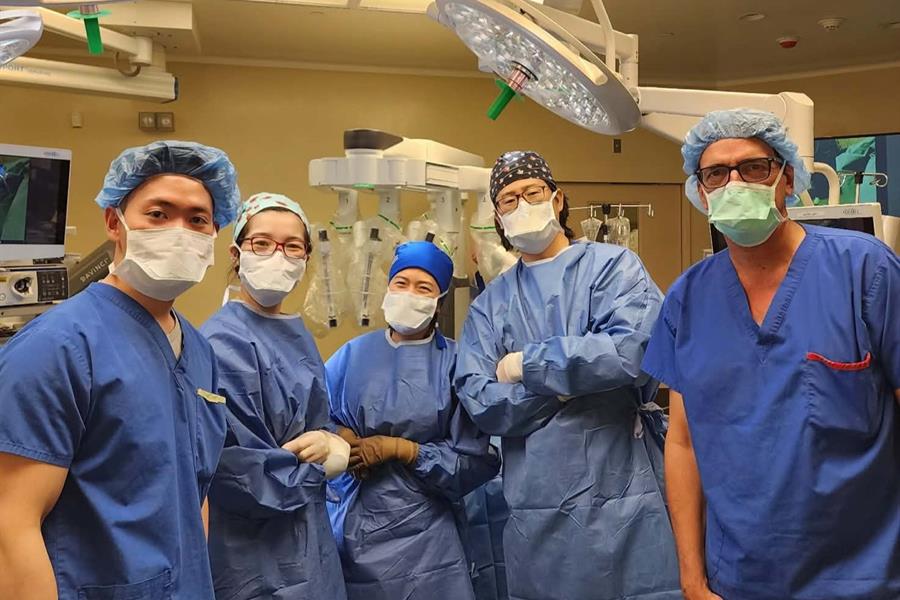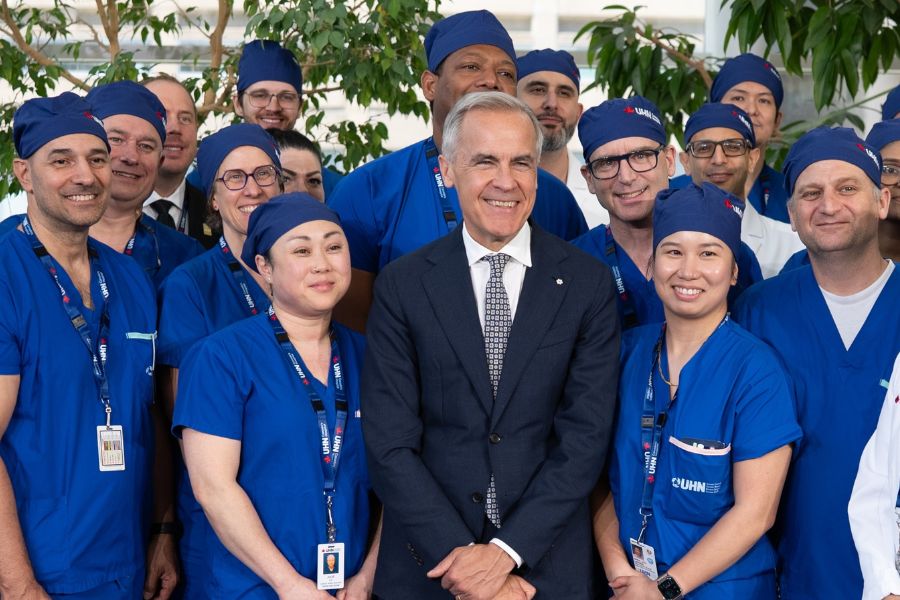
At UHN, the future of surgery is taking shape. In operating rooms, surgical precision means the difference between risk and recovery. Every movement and millimeter matter, and each procedure demands constant, critical decision-making to avoid errors and complications. Now imagine a surgical team guided not only by skill and experience but by real-time data that maps every safe zone, tracks every incision and anticipates every risk. The result is a second set of eyes supporting the surgeon in every decision and adding a new layer of insight and protection.
Artificial intelligence (AI) is that partner. Inside the operating rooms in University Health Network’s (UHN) new surgical tower at Toronto Western Hospital, this vision will become reality as AI evolves from a support tool into a trusted co-pilot for the world’s most complex procedures.
Built for the next generation of surgical care
Building on its status as Canada’s No. 1 hospital, UHN is transforming surgical care with a new 15-storey tower at Toronto Western Hospital. Part of a $1.1-billion redevelopment in partnership with the Ontario government, the tower will add 20 new operating rooms, 82 private patient rooms and 16 additional ICU beds to Ontario’s health care system when it opens in 2028.
As the tower takes shape, it will reflect UHN’s leadership in digital surgical innovation. Designed as a fully integrated ecosystem, it will connect AI, robotics and data-driven platforms with the expertise of surgeons, nurses and care teams, enhancing every stage of patient care. Expanded operating spaces, advanced technologies and dedicated areas for pre- and post-operative care will create an environment built for surgical excellence, collaboration and healing.
This bold vision for the future of surgery is possible thanks to donor support. Their generosity enables UHN to be global leaders in technology, training and patient care. It drives the research and development that will transform care not only in Toronto, but across Canada and beyond.

AI in action
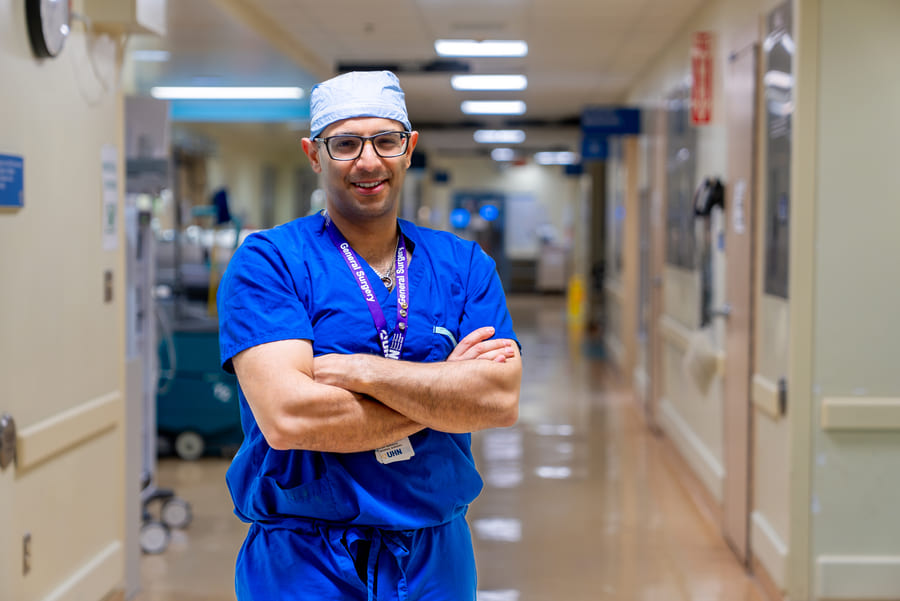
At UHN, these breakthroughs are already happening thanks to innovators like Dr. Amin Madani, Staff Surgeon in the Sprott Department of Surgery and Director of the Surgical AI Research Academy (SARA). Dr. Madani’s internationally recognized research in surgical AI demonstrates how technology can enhance safety and precision in the operating room. Working with a multidisciplinary team, he developed a prototype using computer vision and real-time data to guide surgical decision-making. By analyzing live video, the system identifies safe and unsafe zones for dissection, helping surgeons navigate complex procedures that demand millimetre-level accuracy.
This work reflects UHN’s leadership in digital surgical innovation, where AI is not replacing expertise but augmenting it. Acting as a co-pilot in the operating room, AI provides an added layer of observation and analysis, improving confidence and safety in real time.
“AI will never replace the judgment or skill of a surgeon,” says Dr. Madani. “What it can do is help us see more, decide faster and operate with greater precision. It’s a powerful tool for improving safety and learning in real time.”
Built for what comes next
AI advances will fundamentally change how surgery is practiced. In the new surgical tower, UHN’s vision is to create operating suites that seamlessly connect every tool, camera and data set, resulting in an environment that gives surgical teams the best possible support.
Recognizing the rapid pace of AI-driven surgical innovation, UHN aims to build adaptability into the design of the new tower. Digitally enabled operating rooms which support continuous data integration will allow AI tools like Dr. Madani’s to evolve as development accelerates. Each connected operating room would draw from centralized computing systems, enabling multiple rooms to share AI resources and adopt new tools efficiently. Together, these features can build a resilient, future-ready ecosystem that will anticipate change rather than react to it.
An infrastructure built for flexibility would allow each new discovery to become a tool that surgeons can adopt quickly and confidently, accelerating its integration into clinical care. New AI systems will integrate naturally with existing surgical technologies, making it easier for surgeons to use these innovations in their daily work. Tools developed at UHN will be applied across multiple procedures, refined in real time and shared widely across the network. This connected framework ensures breakthroughs are accessible and accelerates the pace of surgical advancement across UHN and beyond.
“By embedding AI directly into the tower, we can develop, refine and deploy these tools faster than ever,” says Dr. Madani. “It’s an opportunity to redefine surgery itself, setting a new standard not just at UHN but for surgical care worldwide.”
In this environment, every surgery becomes both research input and output. Data captured from live procedures feeds UHN’s research and discovery engine, training AI models and generating insights that directly improve care and inform clinical trials. Each operation strengthens algorithms, expands understanding and uncovers new ways to enhance safety and accelerate recovery. The result is a continuous cycle of innovation, where learning and application happen in real time and fuel the next era of surgery at UHN.
Beyond the operating room
The impact of this work reaches far beyond a single operating room. Through the development of AI tools like Dr. Madani’s, UHN can capture the expertise of its world-leading surgeons and use it to guide surgical teams around the globe. These technologies allow less experienced teams, or those in remote or underresourced locations, to make safer, more informed decisions using knowledge developed at UHN. This reflects Dr. Madani’s broader vision to ‘democratize surgery’ – ensuring that advances made by leading experts at UHN can improve care for patients around the world.
AI is also changing how surgeons learn and refine their skills. At UHN, the new tower will allow surgical trainees to gain hands-on experience with AI-enabled systems, learning how to interpret real-time data and apply it in complex procedures. This training will give the next generation of UHN surgeons the tools to continue to drive change and leadership in surgical care.
Evolving world-class care
With construction now underway, UHN’s new surgical tower marks the next critical milestone in Canadian health care. More than a building, it will bring together people, technology and expertise to redefine what’s possible in surgical care. The vision for UHN’s tower shows how human expertise and AI can unite to save lives, accelerate discovery and set new global standards for surgical care.
Donor support is making this future possible for UHN. It fuels the research, education, and state-of-the-art equipment and digital infrastructure, enabling breakthroughs that attract talent, create advanced facilities and deliver better care at Canada’s number-one hospital and beyond.

No one ever changed the world on their own but when the bright minds at UHN work together with donors we can redefine the world of health care together.