As our population changes, so must our health care system.
The world is in the midst of a “longevity revolution,” marked by a profound shift in population demographics. By 2050, one in six people will be 65 or older, and in the next 25 years, 25 per cent of Toronto’s population will be over age 65. Our health care system must be ready to meet the needs of this growing population.
At University Health Network (UHN), we are preparing for this shift, with new models of care taking shape both within hospital walls and in the communities where people live to better support older adults.
A new model for emergency care
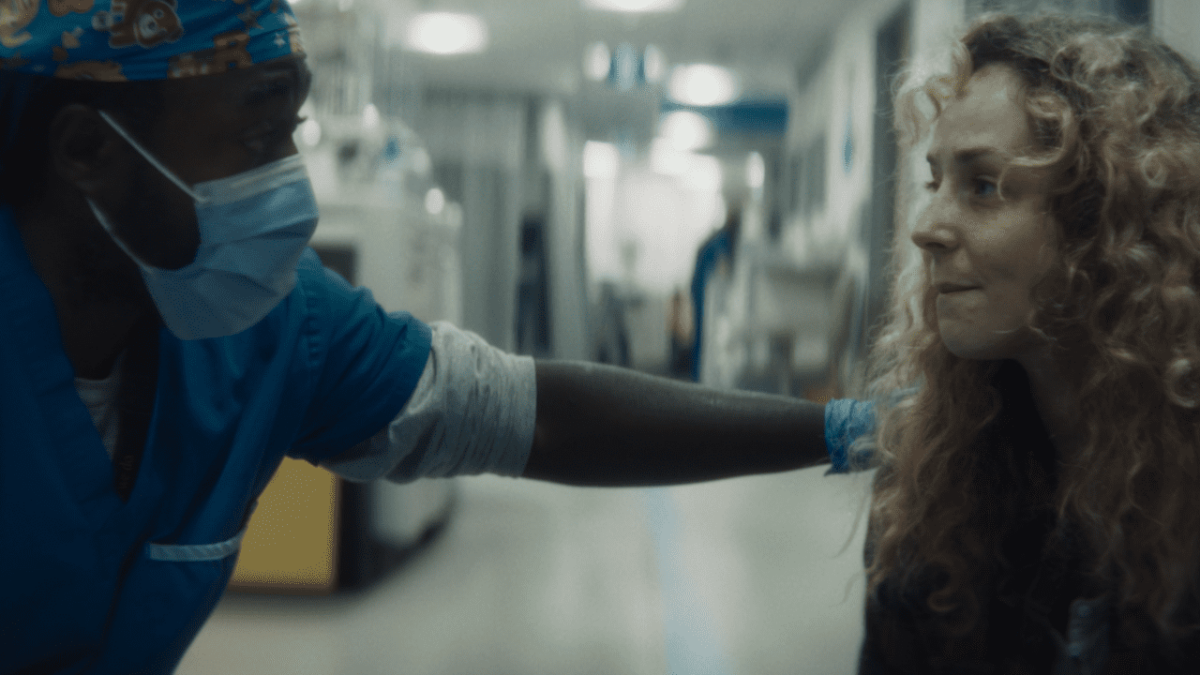
Emergency departments provide around the clock care for patients and families. As people live longer, these departments increasingly care for older adults with complex and urgent needs. To meet this demand, UHN is building the Myrna Daniels Seniors Emergency Medicine Centre, Canada’s first centre of excellence for emergency care for older adults.
The Centre aims to improve care for seniors in UHN’s EDs and includes a new purpose built space under construction at the Toronto Western Hospital. The 9,000 square foot centre has been purpose-built using senior-focused design principles reflected in every detail. From wayfinding and supportive lighting to non-slip, glare-resistant flooring, handrails and accessible finishes, the environment is designed to reduce risk and support comfort and dignity. Patients and caregivers played an active role in the design, creating a space that feels calm and intuitive.
Patients will be supported by an interprofessional geriatrics team addressing medical, mobility, cognitive and social needs to improve outcomes and simplify care navigation.
Research and education will play a key role, with initiatives such as predictive models for frailty and delirium enabling earlier risk identification, and new training programs building expertise in geriatric emergency medicine. The Centre also aims to help support translation of this model of care beyond UHN.
The Centre is expected to open early next year and set a new standard for senior-focused emergency care.
Supporting aging at home and in community
Most older adults want to remain in their own homes for as long as possible. But without the right support, small challenges can grow into health crises – leading to emergency department visits, longer hospital stays and a loss of independence.
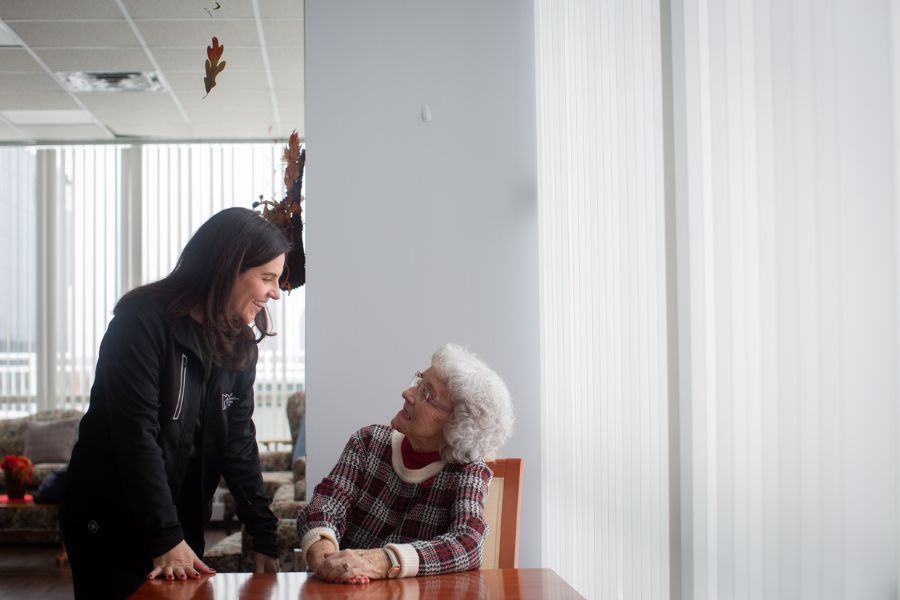
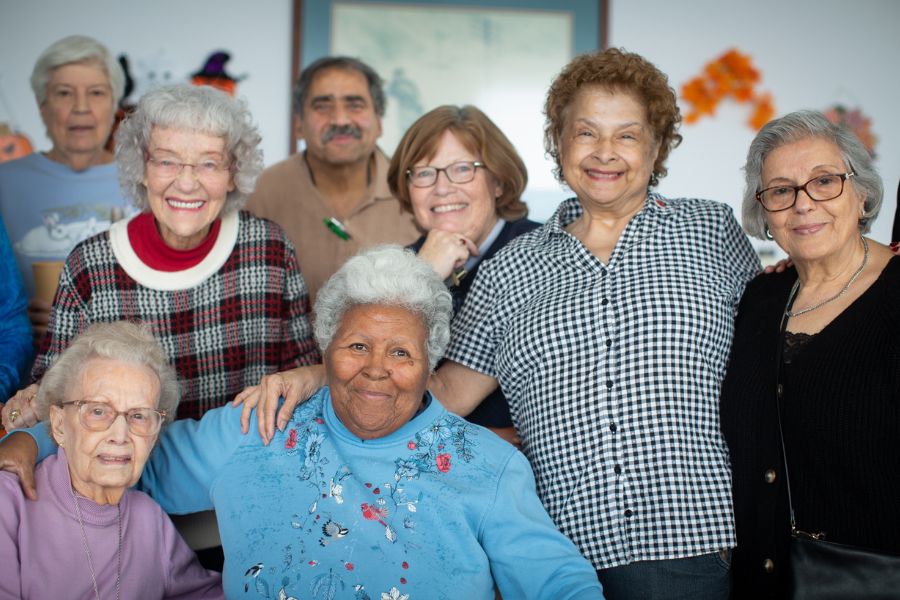
Through the NORC Innovation Centre (NIC), UHN is helping lead a new approach to aging in place by bringing health and social supports closer to home. Working with residents and community partners, the model helps older adults stay well, stay connected and get support earlier. That matters because when people are isolated, or struggling to navigate multiple providers and transitions in care, small concerns can quickly become bigger health problems.
Many apartments, condos and co-operative housing have become naturally occurring retirement communities, or NORCs, where a significant number of residents are older adults. In Toronto alone, 531 buildings housing approximately 84,000 seniors have been identified as NORCs.
Programs are shaped by residents, with support from local volunteer ambassadors who help identify priorities and bring services into their building, often transforming shared spaces into hubs for connection and well-being. The model is designed to address not only immediate care needs, but also the everyday challenges that can affect health and independence, including social isolation, barriers to access, unmet practical needs and the difficulty many older adults face in navigating multiple providers or transitions in care. By helping people get support sooner, before small issues become crises, the UHN NORC model can help reduce avoidable visits to the emergency department and lower the chance of longer hospital stays.
Over the past four years, the UHN NORC model has expanded to 30 buildings across the GTA, reaching more than 4,500 older adults. The Centre has also launched a NORC Accelerator Program with six participating lead agencies to help spread this work more broadly.
Together, these efforts reflect UHN’s approach to caring for an aging population, from specialized emergency care for older adults in moments of crisis to community-led supports that help people stay well, stay connected and age in place with dignity.

No one ever changed the world on their own but when the bright minds at UHN work together with donors we can redefine the world of health care together.