Mysterious cardiac symptoms led to a devastating diagnosis for Maria Loschiavo when she learned she had a tumour on her heart. While the tumour was benign (non-cancerous), it was incredibly dangerous. It was causing life-threatening arrhythmia; her heart could stop at any moment.
She needed a life-saving surgery that only an extremely limited number of surgeons in the world are capable of performing. UHN’s Dr. Robert James (RJ) Cusimano is one of them; many of the others were trained here by him.
Struggling with unexplained symptoms
Maria Loschiavo was in her last year of high school when she noticed something was off. She was feeling lightheaded sometimes and in January, she fainted without explanation.
Whereas just months earlier, she was healthy and active, symptoms like dizziness and lightheadedness quickly began taking over. Maria began avoiding going out with friends, only leaving the house for school and medical appointments, because she was scared she may faint again. As her world shrunk and unexplained symptoms continued, she felt scared and isolated.
Testing at a local cardiology clinic revealed a life-threatening arrhythmia. Her care team knew she needed specialized help, so they sent her to one of the world’s only dedicated inherited arrhythmia clinical and research programs: UHN’s Peter Munk Cardiac Centre.
Getting answers at UHN’s Peter Munk Cardiac Centre
The Peter Munk Cardiac Centre is one of the best in the world in the diagnosis, care and treatment of patients even with the most complex cardiac conditions.
She was seen by Dr. Michael Gollob, a world-leading expert in heart rhythm disorders, particularly for patients with highly dangerous cases like Maria’s. As Research Director of the Inherited Arrhythmia and Cardiomyopathy Program, Dr. Gollob and his team have uncovered genetic causes for numerous types of arrhythmia conditions, allowing for early interventions that can help save lives of children and young people living with these terrifying conditions.
Dr. Gollob sent Maria for an MRI, so they could find out more about what was causing her arrhythmia.
Maria was home after a day at school when she saw her MRI results posted in her online chart: a mass on her left ventricle. In other words, a tumour.
Panic began to set in. Moments later, she got a call from Dr. Gollob who explained that while it appeared benign, he wanted her admitted immediately, so she and her family drove straight to the Peter Munk Cardiac Centre.
Maria would soon learn there was no better place she could have gone. Her cardiovascular surgeon, Dr. Robert James (RJ) Cusimano, is a global leader in cardiac tumours, leads the Cardiac Tumour Clinical and Research Program and holds the David & Stacey Cynamon Professorship in Cardiovascular Surgery Innovation and Education.
“Dr. Cusimano had excellent bedside manner,” Maria says. “He answered all my questions patiently and helped me and my family understand.”
A life-saving surgery not possible almost anywhere else
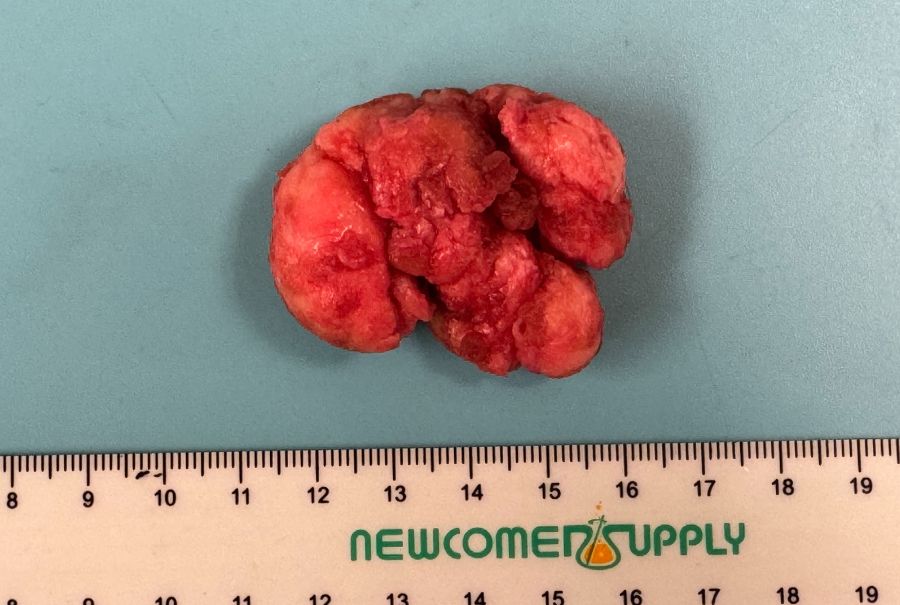
Cardiac tumours are incredibly rare. It is estimated that there are less than 10,000 cases worldwide each year. Of that number, its thought that only a handful are the type of tumour Maria had: cardiac fibromas, an extremely rare benign tumour that is usually detected in childhood. Maria had likely been born with the tumour, but it went undetected for nearly two decades until it began causing symptoms. Thanks to support from donors to UHN Foundation, Dr. Cusimano has established a global registry of patients with cardiac tumours so researchers can better understand these extremely rare tumours.
“I learned it’s actually more common to have cancer in the heart than a benign tumour like mine,” Maria says. “My tumour type doesn’t affect you – until suddenly, it does.”
Dr. Cusimano explained that the tumour was causing Maria’s arrhythmia. Untreated, Maria would be at risk of cardiac arrest or heart attack. Surgery to remove the tumour was the only option, but with such a rare case, only a few surgeons worldwide are capable of performing it.
Luckily, Dr. Cusimano is one of them.
After months of searching for answers and help, Maria had found exactly the person she needed. This life-saving surgery couldn’t have happened almost anywhere else.
Finding a new direction
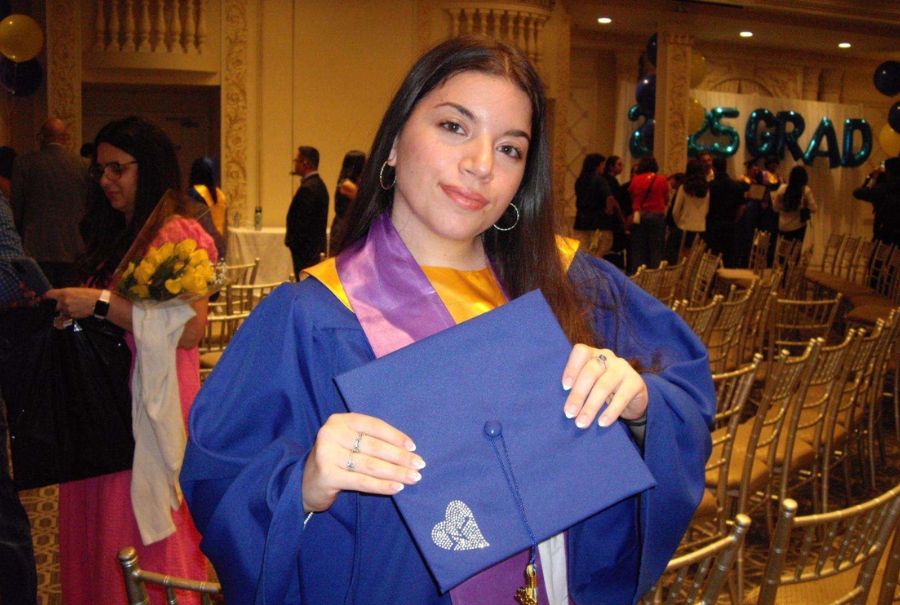
Just a week and a half after her eighteenth birthday, Maria was wheeled into the operating room for open-heart surgery. Dr. Cusimano and his team successfully removed the tumour. It is a testament to the skill of Dr. Cusimano and his surgical team that a surgery too complex to be performed almost anywhere else in the world went off without a hitch.
A week later, Maria was back at home, recovering. And just a few months after that, life returned mostly to normal. Maria began to go out again, socializing and hanging out with friends.
Maria is no longer experiencing any arrhythmia or abnormal heart rhythm. The danger has passed and now, she can get back to living her life like any other healthy teenager: and her plans for the future are looking bright.
She had originally planned to study engineering, but in the weeks after her surgery, some serendipity led her down a new path. She learned about cardiac perfusionists – a specialized medical professional who works with anesthesiologists to maintain the patient’s breathing and circulation during cardiac surgeries. It’s a profession that is sorely needed, with a significant shortage of perfusionists across Canada.
She thought about how someone had done this during her own recent surgery, helping to keep her safe in the operating room. Now, Maria is inspired to become a cardiac perfusionist herself.
One day, those studies might take her back to UHN – this time, as a student. UHN’s Michener Institute is home to Canada’s biggest program for training cardiac perfusionists, and the only one in Ontario. From world-leading surgical expertise to training Canada’s next generation of cardiac specialists, UHN is there for every patient in need of cardiac care, no matter how rare the condition.
And for patients like Maria, Team UHN’s dedication is not just life-saving; it’s life-changing.

No one ever changed the world on their own but when the bright minds at UHN work together with donors we can redefine the world of health care together.