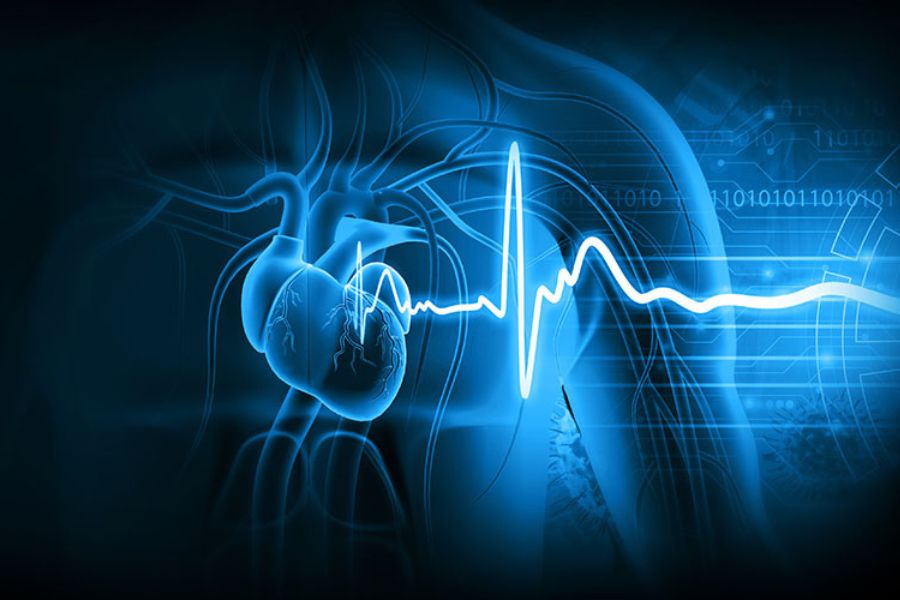
A new study from researchers at UHN unveils an AI model to analyze data from electrocardiograms (ECG) — quick, low-cost recordings of the heart’s electrical activity that are commonly used as an initial test for patients with cardiac symptoms.
The model has been made publicly available and may enable faster, more consistent ECG interpretation for screening, assessing risks and predicting the need for further testing.
AI tools can help doctors interpret ECG results. However, most AI tools need large volumes of manually labelled data to learn general patterns.
A foundation model — a type of AI trained on a very large dataset to learn patterns in the data — can get around this issue through its ability to learn the basic patterns in non-labelled ECGs. From there, it only needs a few labelled examples to work on new tasks.
A research team at UHN set out to create a publicly accessible foundation model capable of interpreting ECGs and assessing its performance on clinical tasks. Using data from 1.5 million ECG tests, they developed ECG-FM, a model designed to learn ECG patterns on its own.
The team then evaluated its ability to interpret common ECG findings and predict changes in heart function indicators, such as reduced left ventricular ejection fraction (LVEF) — an important measure of how effectively the heart pumps blood.
When tested, ECG-FM performed better than previous models and worked well across different datasets and with little labelled data. It was accurate in interpreting common ECG findings and identifying LVEF and heart rhythm irregularities such as atrial fibrillation.
Overall, ECG-FM is versatile, efficient and accurate for tasks like heart screening, risk assessment and monitoring. It also reduces the need for large, labelled datasets, providing a reproducible framework for ECG research.
To support comparability and usage, the team has released their AI code along with tutorials and a public benchmark, so that others can test, adapt and improve it. This is especially beneficial for small ECG datasets geared toward a specific task. Learn more about the electrocardiogram analysis foundation model and this research.
This work was supported by generous donors to UHN Foundation.

No one ever changed the world on their own but when the bright minds at UHN work together with donors we can redefine the world of health care together.