It all began with one patient, one transplant and one bold decision.
While liver transplantation was still emerging in 1985, a small team of physicians at UHN and partnering hospitals decided that science, skill, determination and a shared vision could rewrite what was possible. They challenged liver failure — a diagnosis that had long been considered an immediate death sentence.
Four decades later, that belief has been transformed with hope. UHN’s Liver Transplant Program, part of the Ajmera Transplant Centre, has now surpassed 4,800 liver transplants — more than any other centre in North America — turning what was once experimental into one of medicine’s most powerful life-saving procedures.
Those 4,800 transplants represent 4,800 lives saved. As UHN marks the 40th anniversary of its Liver Transplant Program, it honours the commitment of health care professionals and researchers, the generosity of donors, and the patients who are given another chance at life.
Founding years of UHN’s Liver Transplant Program
For many patients with chronic liver disease, liver transplantation is the only treatment option that can save their lives.
During the founding years of liver transplantation, physicians faced challenges with managing immunosuppression — the process of lowering the immune system’s activity to prevent it from rejecting transplanted organs — and fighting infections post-surgery.
UHN physicians advocated for investment in the work, while advancing the science and surgical procedures that would lay the foundation for what the program is today: the largest liver transplant program in Canada.
Now part of UHN’s Ajmera Transplant Centre, one North America’s largest and most comprehensive transplant program, the Liver Transplant Program is recognized internationally for being a leader in both patient care and education.
“Our fellowship program is one of the most sought-after fellowships for transplant in the world,” says Dr. Markus Selzner, Surgical Director of the Liver Transplant Program since 2018.
“Throughout the program’s history, we have implemented innovation. We’re doing things we didn’t do before or that have never been done and we’re completing transplants in people we wouldn’t have transplanted 20 years ago.”
UHN’s ex-vivo organ perfusion technology and living donor program are two factors that have helped drive this growth and innovation.
Achieving what’s never been done
Initially used at UHN in lung transplantation, ex-vivo technology — essentially a machine that keeps organs alive outside of a person’s body by mimicking body temperature and providing nutrients — is now being more widely adopted for liver transplants at UHN under the leadership of Dr. Selzner.
“Surgery and transplantation are evolving,” says Dr. Selzner. “But the need for liver transplant still out numbers the amount of transplants we’re doing.”
UHN’s Centre for Living Organ Donation aims to help meet this need. Created in the early 2000s, the centre specializes in raising awareness, promoting research and offering patients a shorter pathway to kidney and liver transplants.
“We have a living donor program that is not common in the western world,” says Dr. Elmar Jaeckel, Medical Director of the Liver Transplant Program since 2022.
“About 30 to 40 per cent of all our transplants are from living donors and it’s a huge success.”
This success is supported by the collaborative team at UHN who remain committed to innovative patient care.
“We have a highly specialized program and such a good team. We’re always working together to push borders,” says Dr. Jaeckel. “We are also one of the leading centres in the world using artificial intelligence to aid in decision making, and we’re using cell and gene therapy to minimize the side effects of life-long immunosuppression.”
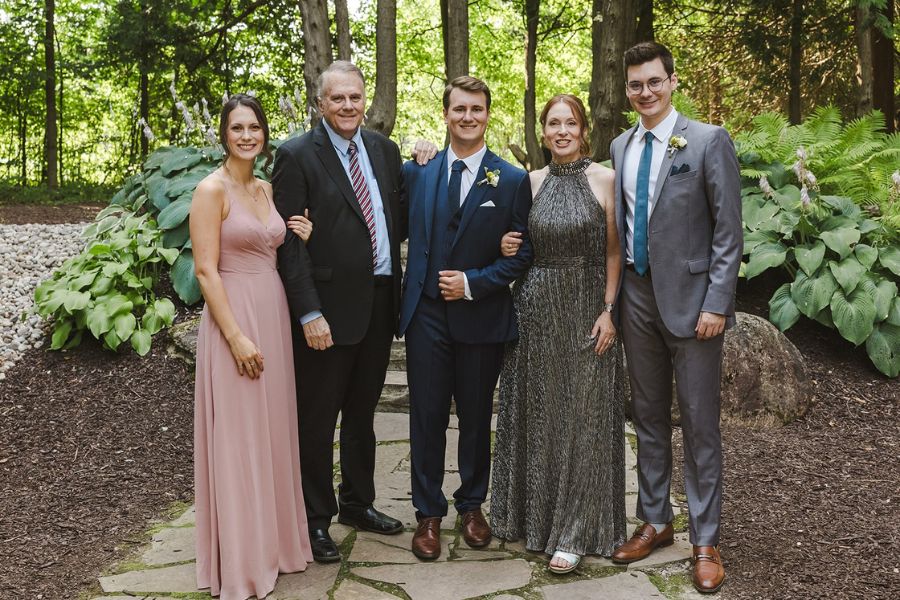
Doug Munro receives a phone call that changes everything
Pushing boundaries while remaining committed to patients like Doug Munro is what the team looks forward to continuing.
In the fall of 2023, at age 62, Doug began experiencing signs of liver failure and was eventually diagnosed with non-alcoholic fatty liver disease.
He developed serious symptoms, including ascites (fluid in the belly), that gave clear indication that his liver wasn’t working normally and was starting to fail.
“I started to get worse and worse. I had weight loss, nausea and a lot of pain. I couldn’t keep my food down and was vomiting all the time. And then I had falls where I hit my head severely at least three times. It was really hell on earth,” says Doug.
Doug needed a liver transplant to survive. He was put on a waiting list for a donated liver, but time was of the essence.
“My liver was shot,” says Doug. “I was at that point where doctors told me I had about two weeks and I wasn’t sure what to make of it. I was very concerned and I didn’t know anything about liver transplants. I thought I was going to die and I almost did.”
On what he considers a fateful day, Doug received a phone call from Toronto General just as he was leaving the hospital’s parking lot. His wife was about to drive them home from his appointment, which was originally scheduled for the day before.
A hospital staff member informed Doug that a liver was available for his transplant, but he needed to come in immediately.
Within hours, Doug was back inside Toronto General, ready for the surgery that saved his life.
“I still can’t really believe it. I’m alive more than a year and a half later. It has been a hard recovery, but I made it through,” says Doug.
“I’m very thankful to UHN, my surgeon and team, and to God. I’m also thankful for my wife who was there by my side. This experience changed me for the better and made me a lot more thankful for things in life. Over 20 years ago, I would have been a goner, but because of the research, technology and the doctors and their abilities, I’m here today.”
It is this dedicated research and commitment to patient care that continues to drive UHN’s Liver Transplant Program forward.
Looking ahead, the program holds new promises in advancing robotic surgeries, improving immunosuppression treatments and expanding access to transplantation.
“Our dream is to get more healthy livers and not have people die on the organ waiting list anymore,” says Dr. Selzner.

No one ever changed the world on their own but when the bright minds at UHN work together with donors we can redefine the world of health care together.