When James “Scott” Wilson was rushed to the hospital in 2023 with end-stage liver failure, he knew his time was running out. As Scott’s condition worsened, the hardest part was imagining his children growing up without him.
For patients living with end-stage organ failure, time is often measured in days or weeks. Scott’s only hope was a transplant, yet in Canada the demand for donor organs far exceeds the supply. Across the country, for every patient who receives a life-saving transplant, many more remain on the waiting list. For those who do receive a donor organ, it represents the possibility of a future once thought out of reach.
At University Health Network (UHN), the goal is to close this gap so that more patients can receive a second chance at life.
Keeping hope through moments of darkness
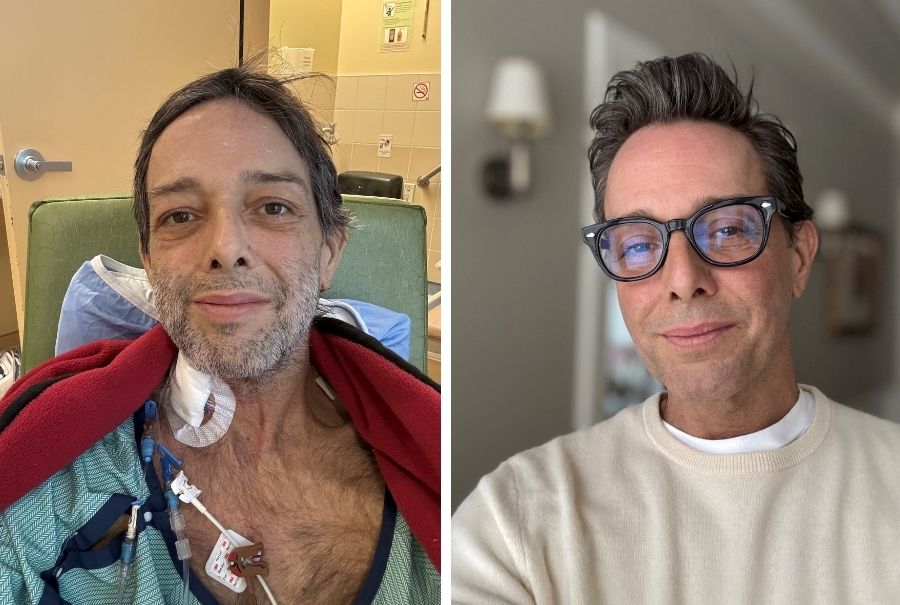
When Scott was diagnosed with compensated liver cirrhosis in 2022, he was determined to stay strong for his children. Together, they had already faced heartbreak after the sudden loss of his husband several years earlier. But by 2023, the disease had progressed to decompensated liver cirrhosis stage 4 – end stage liver disease – leaving him critically ill. Receiving a liver transplant was his last chance.
“I couldn’t bear the thought of my children losing another parent,” says Scott.
In a desperate search for a living donor, Scott launched a social media campaign that soon drew national media attention. His sister offered to donate but was not a match. As his condition deteriorated, Scott feared he would have to prepare his children for a future without him.
Transplant eligibility depends on being sick enough to qualify but healthy enough to survive surgery. The unfortunate reality is that many patients deteriorate while waiting and may be too ill when a donor organ becomes available.
Just when it seemed hope was gone, Scott got the call: a deceased donor liver had become available. Within 24 hours, he was in surgery at Toronto General Hospital. Scott’s life was saved by the generosity of an organ donor and the expert care of the transplant team at UHN’s Ajmera Transplant Centre.
“The moment I got that call, it meant life,” he recalls. “It meant my children would still have me.”
Transforming lives through surgery and support
UHN’s Ajmera Transplant Centre is Canada’s largest and most comprehensive transplant program, performing more than 700 transplants each year and accounting for more than 20 percent of all transplants nationwide. It serves as a vital hub for transplant care, providing world-class follow-up to more than 7,500 patients from more than 550 communities across the country. Recognized internationally for expertise in kidney, liver, lung, heart, pancreas and intestinal transplants, the Centre is a national and global referral destination for patients requiring some of the most complex procedures.
Patients from across Canada turn to the Ajmera Transplant Centre for its exceptional multidisciplinary care and its success in translating leading-edge research into real-world results. The Centre’s one-, five- and 10-year survival rates consistently exceed international standards, earning it recognition as one of the top transplant programs in the world.
The Centre’s liver transplant program, now in its 40th year, has performed more than 4,000 transplants to date. In 2024, the team completed 209 liver transplants, breaking a North American record. This success is driven by a highly skilled surgical team and a dedicated network of nurses, coordinators and specialists who support patients through every step of the journey. Every donor surgery at the Centre is treated with the utmost care and respect, reflecting the extraordinary nature of the gift. The Ajmera Transplant Centre’s commitment to safety ensures that each procedure meets the highest standards of care, just as Scott experienced during his life-saving transplant and recovery.
Thanks to the expertise of his surgeon, Dr. Blayne Amir Sayed, and the dedicated experts at the Ajmera Transplant Centre, Scott’s operation was a success. Dr. Sayed specializes in living and deceased donor liver transplantation for both adult and pediatric patients, providing highly complex care with compassion and precision. Today, Scott is back home, grateful for every day he gets to spend with his children and for the team that made his recovery possible.
“Transplantation is the pinnacle of what we can do as clinicians, taking some of the sickest patients and transforming their health and their lives,” says Dr. Sayed. “None of it is possible without generosity, whether it’s an organ donor who gives the gift of life or a financial donor who fuels the innovation and care that makes transplantation possible. Both forms of giving inspire me every day, and both give families more time together.”
Expanding access to life-saving transplants
Living donor liver transplants are the preferred treatment for liver failure, offering earlier intervention and better long-term outcomes. The Ajmera Transplant Centre is a global leader in living donor liver transplants. Since 2000, its living donor liver transplant program has given more than 1,000 adults and 300 children a second chance at life – the highest numbers of any program in North America.
To further expand access, in 2018 UHN established the Centre for Living Organ Donation in 2018. The only program of its kind in Canada, it is dedicated to improving access to life-saving kidney and liver transplants, supporting donors and ensuring more patients can receive the care they need.
However, most liver transplants in Canada come from deceased donors and the need for viable organs always exceeds the number available. In 2023, 15 percent of Canadians waiting for a liver transplant died before receiving one, a higher mortality rate than any other transplanted organ.
“Getting a transplant is like receiving a chance to start life over. That’s why we’re pushing to increase the number of livers available for transplants, because waitlist mortality is still far too high,” says Dr. Deepali Kumar, Director of UHN’s Ajmera Transplant Centre.
To achieve this goal, UHN is changing the future of transplant medicine through innovative techniques such as ex vivo organ perfusion. This groundbreaking technology keeps organs alive outside the body, allowing surgeons to assess, repair and transplant organs that would not previously been suitable for transplant. The lung transplant program at UHN has been a pioneer in the development and use of ex vivo lung perfusion, and the liver and kidney transplant teams, under the direction of Dr. Markus Selzner, have been early adopters of the technology. Research is also underway to bring ex vivo heart technology to clinical use at UHN.
Each year, organs treated with ex vivo reach more patients, offering greater hope and improved outcomes. At UHN, almost 90 livers once considered unusable or too high risk have been successfully transplanted into patients, saving the lives of Canadians in desperate need –including Scott Wilson. His donor liver was treated with ex vivo perfusion before transplantation, making his surgery possible.
“Thanks to advanced technologies, we are now able to repair and transplant livers that would not have been viable before, reducing the number of wait list deaths,” says Dr. Kumar. “This is bringing us closer to a future where every patient has access to the transplant they need.”
These transformative health care breakthroughs do not happen without donor support, which funds the research, technology and training needed to turn promising ideas into life-saving solutions. Donor-funded research made the development of ex vivo perfusion technology possible, provides long-term support for patients and families, and helps train the next generation of transplant specialists and researchers. Donor support allows UHN to advance care globally while directly improving outcomes for patients like Scott and their loved ones.
Living with gratitude
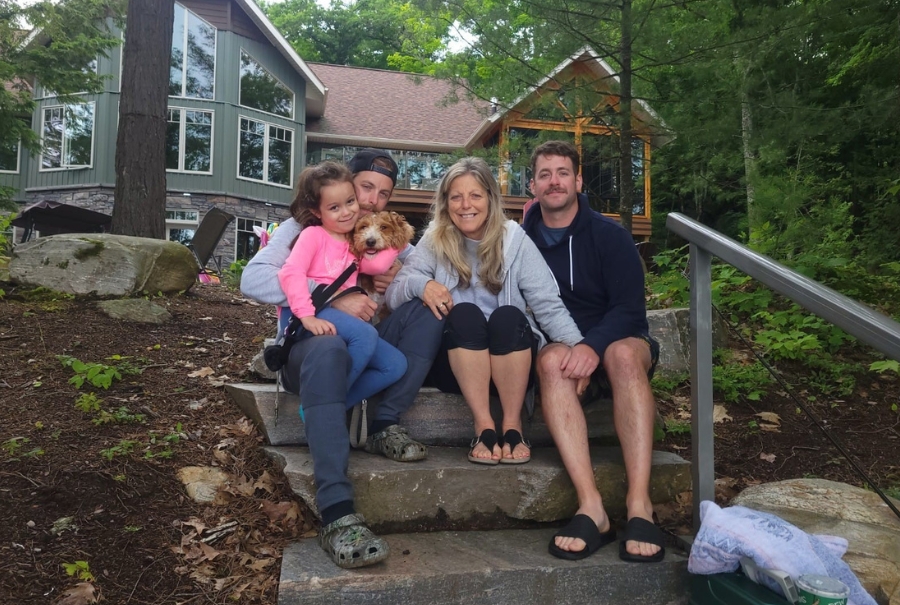
For Scott, life after transplant has been filled with family moments he once feared missing. From the simple pleasures of gardening, family dinners and baseball games to the joy of watching his children grow, Scott is grateful for every day that his organ donor and transplant made possible.
“Every day is a gift,” he says. “From celebrating holidays to simply getting out of bed, I know how lucky I am. Even the aches and pains of aging are just signs that I’m still alive.”
Determined to give back, Scott now focuses on advocacy, education and raising awareness about the power of organ donation. He shares his story to honour his organ donor and inspire others to register and give the ultimate gift of life.
“The whole point is to keep giving back,” Scott says. “I am so grateful to be running my daily marathon of life. As is. Better than ever.”

No one ever changed the world on their own but when the bright minds at UHN work together with donors we can redefine the world of health care together.