Our eyes are an incredibly important organ, but also a very fragile one. Many individuals may develop vision conditions as they age, but there are also eye diseases you might be at risk for before you’re even born.
Genetic or inherited eye diseases are conditions that can start to affect vision at any age and can affect different parts of your eyes. Genetic diseases which affect your retina, the light-sensitive layer at the back of your eye, are referred to as inherited retinal diseases (IRD). Examples of IRDs include Retinitis Pigmentosa and Stargardt’s disease, two of the most common types of inherited retinal diseases.
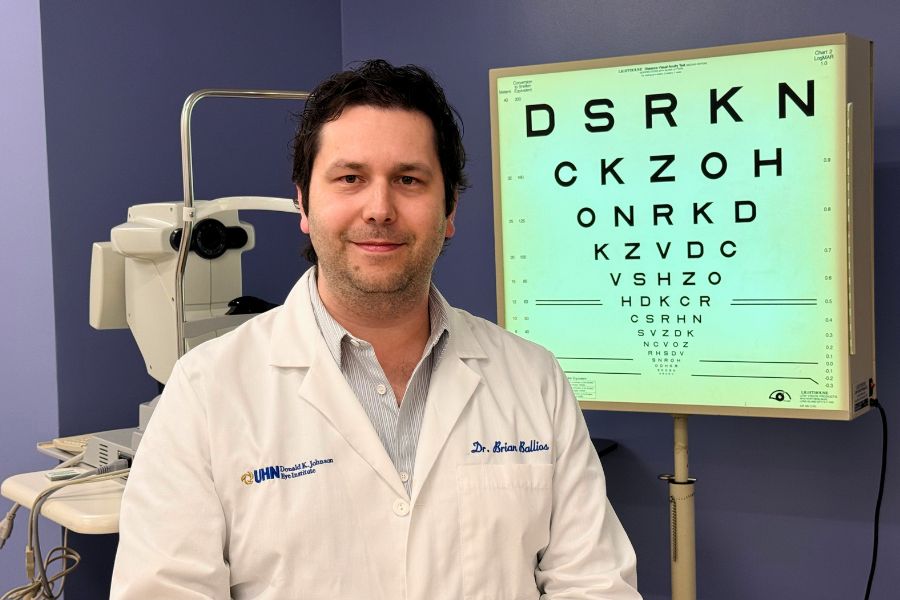
Dr. Brian Ballios is a Clinician-Scientist at the Donald K. Johnson Eye Institute and focuses on developing therapies for people living with genetic diseases associated with the eye and retina. We spoke to Dr. Brian Ballios to decode some of the myths associated with genetic eye and retinal diseases and eye health.
What is a genetic or inherited eye disease?
A genetic eye disease is a condition caused by your genes which impacts your vision. Genes are the small sets of instructions inside your body that make you, you. Unfortunately, sometimes your genes might not have the right information to do something properly. This can lead to mistakes – some are harmless, but others can result in the development of diseases such as IRDs.
Myth: Eye diseases usually only impact older people.
Fact: Inherited retinal diseases and other genetic eye diseases can impact people of all ages, some can result in severe vision loss. At UHN, I study the genes which can lead to diseases of the eye, specifically the retina. Think of it like the “light-sensitive wallpaper” inside your eye which tells your brain what you’re seeing.
Because someone is young, they might assume that their body works completely fine and will ignore subtle changes in their vision. It’s important that we talk about these conditions early so that people can get the help they need.
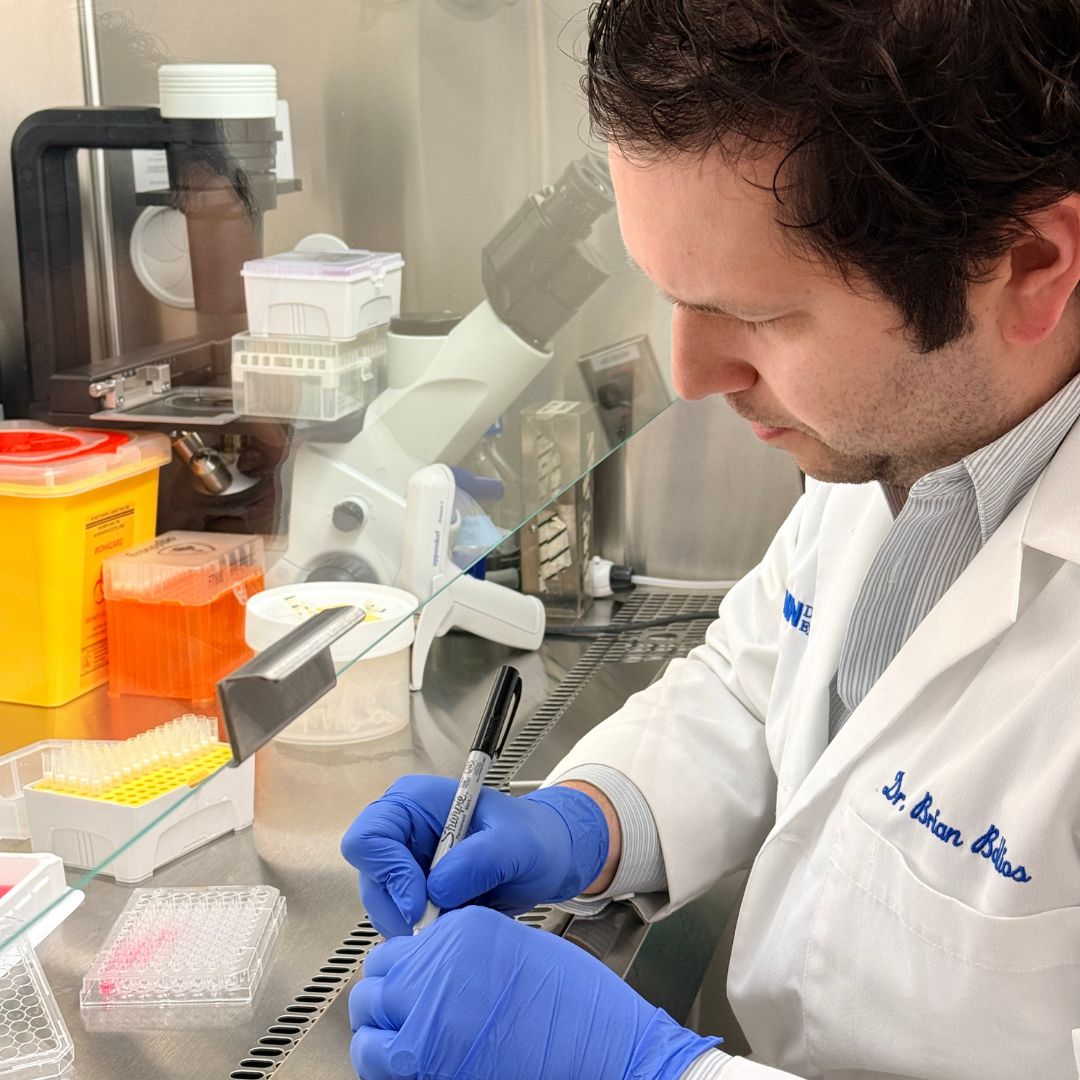
Myth: If no one in your family has known vision loss, you can’t have an IRD.
Fact: We all have genes in our bodies, and we all inherit our genes from our parents. Many of my patients tell me that they don’t know of anyone else in their family who has a similar condition. That’s because the vast majority of these conditions are inherited in a recessive fashion. Recessive inheritance means that the disorder often skips many generations and may arise in just one individual in an entire family tree, or perhaps in a couple of siblings. So, it’s not unusual to hear a patient say, “I don’t remember anyone in my family tree who has this sort of condition.”
Genetic diseases of the retina (inherited retinal diseases) affect an estimated 90,000 Canadians.
Myth: You can prevent the progression of genetic eye diseases.
Fact: We are still working towards developing effective therapies to slow or prevent changes in vision due to IRDs and other genetic eye conditions. Thanks to the support of donors, my colleagues and I are running several clinical trials at UHN’s Donald K. Johnson Eye Institute, including studies on IRDs. These clinical trials are focused on understanding and developing treatments for patients living with many retinal conditions, including IRDs.
For those currently living with these conditions, there are a number of resources and tools available for people who are experiencing changes with their vision. In addition to ophthalmologists, social workers and low vision and education specialists can help you navigate any new obstacles you might face.
The Donald K. Johnson Eye Institute is located at Toronto Western Hospital, a part of University Health Network (UHN).