The diagnosis
Like most teenagers returning home from summer camp, Sarah O’Born was exhausted.
After days spent swimming, hiking, and staying up late with friends, she was looking forward to sleeping in her own bed and settling into her usual routine. But that night, Sarah never made it to bed.
She had a seizure.
“I remember talking with my parents about what we were going to have for dinner that night and feeling completely exhausted,” said Sarah. “My dad was watching TV, and there was a scene where doctors were pumping someone’s stomach. I had this overwhelming feeling that it was happening to me. The next thing I remember is waking up to my dad on the phone with 911. The paramedics were on their way.”
As doctors searched for answers, they discovered Sarah had also been experiencing absence seizures – short seizures that cause you to stare and lose awareness of your surroundings. Easy to overlook, these brief episodes are often mistaken for daydreaming or staring off into space and can happen when you are in the middle of an activity or conversation.
What initially appeared to be a single, isolated event was actually part of a larger pattern. Further testing led to a diagnosis that would change Sarah’s life forever: epilepsy, a neurological condition caused by abnormal bursts of electrical activity in the brain that, when uncontrolled, can trigger seizures.
At just 13 years old, this diagnosis would touch every aspect of her life. As a competitive swimmer and diver, activities that once brought freedom suddenly required careful planning and precautions. Sleepovers, school trips, sports practices, and time with friends all carried new considerations.
Yet Sarah was determined not to let epilepsy define her.
Navigating a new chapter
With the support of her family and care team, Sarah attended university, competed on her school’s rowing team, and continued pursuing her goals.
But as she entered adulthood, she faced another major transition: moving from pediatric to adult care, leaving behind the specialists who had cared for her since childhood. Concerns that had once centered around school, sports, and day-to-day seizure management were now evolving into questions about relationships, pregnancy, and starting a family.
Could she safely become pregnant?
Would her medications affect a developing baby?
Could pregnancy make her seizures worse?
Sarah was searching for guidance tailored to her future and life goals but found many of her questions went unanswered.
“These were really important questions that would impact the rest of my life, and I didn’t know where to turn,” said Sarah. “While my seizures were being managed, I felt like there was a missing piece. I wasn’t getting the information or support I needed from my new care team to understand how epilepsy could affect major life decisions like pregnancy and motherhood.”
What Sarah experienced reflects a much larger challenge in health care: the failure to recognize sex as a biological factor.
For decades, sex has been significantly underrepresented in research, medical education, and clinical practice, leaving many patients without access to care designed around their unique needs.
At UHN’s Krembil Brain Institute, Dr. Esther Bui is working to change that.
Closing a critical gap in care
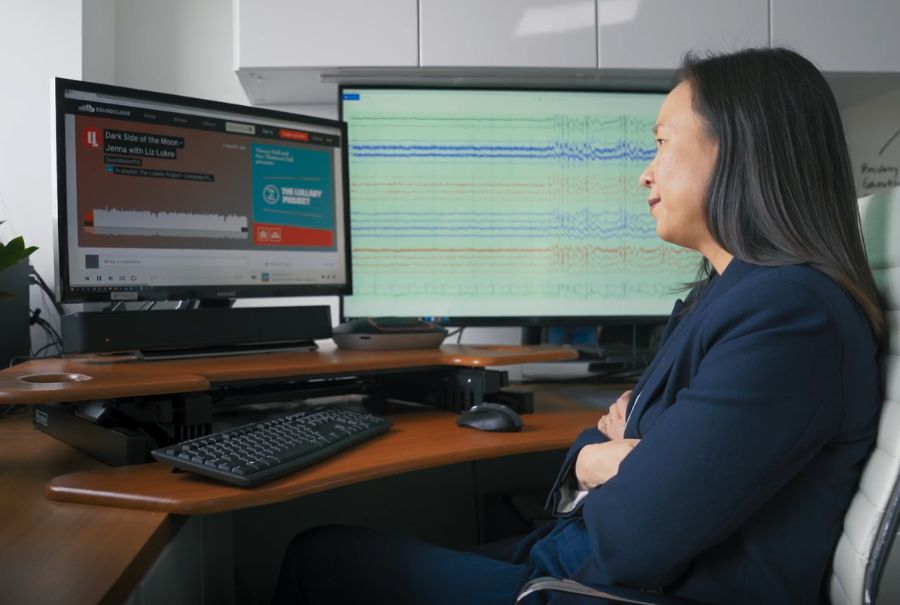
Dr. Esther Bui is a neurologist and clinician educator at UHN’s Krembil Brain Institute and an associate professor at the University of Toronto, where she is advancing women’s neurological health through research, education, and care informed by sex- and gender-specific data.
Based at UHN’s Toronto Western Hospital, the Krembil Brain Institute is home to one of the world’s largest and most comprehensive teams of physicians and scientists dedicated to preventing and treating disorders of the brain and spine. Driven by Dr. Bui’s leadership, and with the generous support of donors, the Krembil Brain Institute has emerged as a global leader in women’s neurology.
Here, Dr. Bui has dedicated her career to advancing women’s neurological health and championing a more personalized approach to care, one that recognizes the important role sex and gender play in neurological disease, treatment and outcomes.
“Many patients come to UHN with questions that go far beyond medication and symptom management,” said Dr. Bui. “They’re navigating major life transitions, from family planning and pregnancy to menopause and aging. Yet our health care system hasn’t traditionally been designed to account for the ways sex and gender influence neurological health, and too many patients struggle to find the care they need.”
Recognizing this gap, Dr. Bui founded an advanced resident training elective in women’s neurological health at the University of Toronto in 2015. She later established Canada’s first and only accredited Women’s Neurology Fellowship, creating a pipeline of specialists equipped to understand how sex and gender influence neurological disease and patient care. Since its launch in 2019, the program has trained Canada’s first women’s neurology fellow and is now welcoming its sixth.
Canada’s most comprehensive clinic for epilepsy
One of Dr. Bui’s primary areas of focus is epilepsy.
At UHN, she leads Canada’s most comprehensive clinic for women with epilepsy, bringing together expertise in epilepsy, obstetrics, gynecology, fertility medicine, endocrinology, genetics, and women’s mental health.
“Epilepsy can create incredibly difficult decisions for women who want to start a family,” said Dr. Bui. “For some patients, seizure control can change during pregnancy. At the same time, women are told that certain medications can carry risks for a developing fetus but then are left to navigate that alone.”
For Sarah, finding Dr. Bui and her team at UHN was transformative.
From their first appointment, the conversation felt different.
Rather than focusing solely on seizure management, the discussion centered on Sarah herself: her goals, her concerns, and the future she hoped to build. Together, they created a care plan designed to make that future possible.
“I start by listening,” said Dr. Bui. “The question isn’t just, ‘How do we control seizures?’ It’s, ‘What does this patient’s life look like? What are their goals, hopes and priorities? And how can we help them achieve those goals safely?’ That’s where meaningful care begins.”
Working closely with Dr. Bui and her team, Sarah adjusted medications, monitored her health, and developed a plan to support her through pregnancy and beyond. The relationship became a partnership built on trust.
“With Dr. Bui, I had a voice in my care,” Sarah said. “I felt guided through every step. It wasn’t somebody telling me what I could or couldn’t do. It was about finding a path forward, together.”
The Lullaby Project
Through her care at UHN, Sarah was also able to participate in one of the clinic’s most innovative research initiatives: the Lullaby Project. Originally created by Carnegie Hall in New York City, the program brings expectant mothers together with professional songwriters to create and record a personalized lullaby for their baby.
At the Krembil Brain Institute, Dr. Bui and her team are studying the program’s impact on pregnant women living with epilepsy, exploring whether creative expression can improve quality of life, reduce stress, and foster a greater sense of empowerment during pregnancy.
For Sarah, the experience provided an opportunity to pause and reflect on a journey that had not always felt certain. Years earlier, she had struggled to find answers about whether motherhood was even possible. Now, as she prepared to welcome her daughter, she was writing and recording a lullaby just for her.
The project reflected the same philosophy that defined her care at UHN: treating the whole person, not just the diagnosis.
A moment once thought impossible
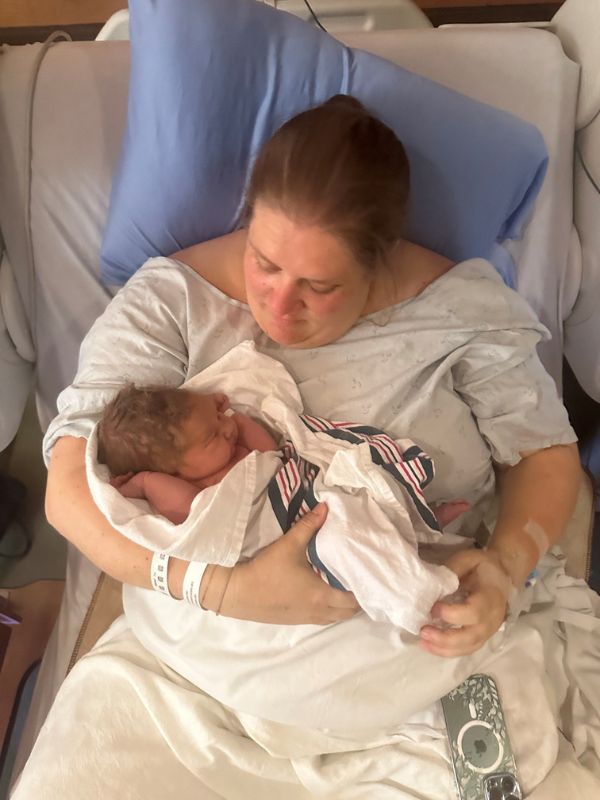
In time, Sarah welcomed a healthy baby girl.
The support she received extended beyond delivery. Dr. Bui worked with Sarah and her partner to prepare for life with a newborn, including strategies to help manage one of Sarah’s most important seizure triggers, sleep deprivation. The entire family became part of the care plan.
Today, when Sarah looks at her daughter, she sees something she once wasn’t sure she would have: the opportunity to build the life she envisioned for herself.
“Dr. Bui is one in a million,” Sarah said. “She gave me my life back.”
Shaping the future of women’s brain health
Sarah’s story is just one example of what’s possible when patients have access to care that reflects the realities of their lives.
Through pioneering programs such as Canada’s first accredited Women’s Neurology Fellowship, specialized multidisciplinary clinics, and innovative education and research initiatives, Dr. Bui and her colleagues at UHN’s Krembil Brain Institute are helping ensure more patients receive the answers, expertise, and support they need.
With donor support, UHN can continue advancing the research, education, and clinical innovation that are driving this progress, helping more patients move beyond uncertainty and toward the futures they imagine for themselves, while shaping the future of women’s neurological health for generations to come.
Because no one should have to face life’s biggest questions alone.
At UHN, they don’t have to.