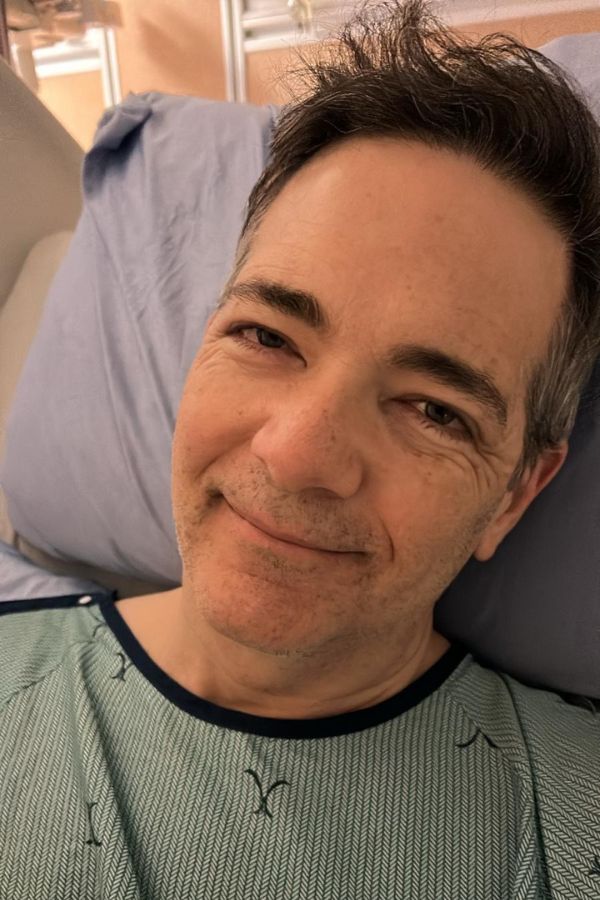
Recipes, dogs, funny videos and pictures from a friend’s family vacation. These were the kinds of things Mike was used to seeing on his social media feed.
As a journalism professor and former CBC news anchor, social media was often a place where he could switch off his brain and mindlessly scroll, forgetting just for a few minutes about the heavy realities he was used to reporting on.
But one day, Mike saw a post that immediately caused him to stop scrolling.
It read: ‘looking for an earth angel.’
The post was from a longtime family friend. Their daughters had grown up together.
She was looking for a kidney donor.
Mike’s stomach dropped.
He knew she had been living with kidney disease and that she had been slowly declining, but it had been a couple of months since he had last seen her.
He didn’t realize how bad it had become.
It had gotten to the point where doctors told her to start preparing for dialysis. Her kidneys were failing.
She needed a transplant.
Without hesitation, Mike sent her a message saying he was interested.
Reading her post, I realized I had the ability to do something about it”
-Mike
Earth angel
“I was stunned,” said Mike. “What struck me the most was that someone I knew and cared for was turning to social media in search of a donor. The fact that she had to put out such a personal and vulnerable call to strangers felt almost unbelievable.”
Unfortunately, for many Canadians in need of a living organ donor, this scenario is not unusual.
Typically, when a patient is in need of a liver or kidney transplant, they are placed on the deceased donor waitlist where they must wait for a suitable organ to become available. On average, patients may wait upwards of two to five years.
Some patients, however, are eligible for a living donor transplant. While living donation can significantly reduce wait times and improve outcomes, it comes with a unique challenge: there is no formal waitlist.
Patients must find a donor themselves.
For many, that means having difficult conversations with family and friends, sharing personal health struggles publicly, or turning to social media with the hope that someone will answer the call.
“Reading her post, I realized I had the ability to do something about it,” said Mike. “I talked it over with my wife and daughter and they were both incredibly supportive.”
However, even with his willingness to donate, the odds of being a match were low. Mike was told there was a 70 per cent chance he would not be compatible.
“Finding a living donor match is often one of the biggest challenges our patients face,” said Dr. Jason Lee, Transplant Surgeon, UHN. “Even when someone is willing to donate, compatibility testing is complex and many potential donors are ultimately not suitable.”
Despite the odds, Mike turned out to be a direct match.
A world leader in transplant care
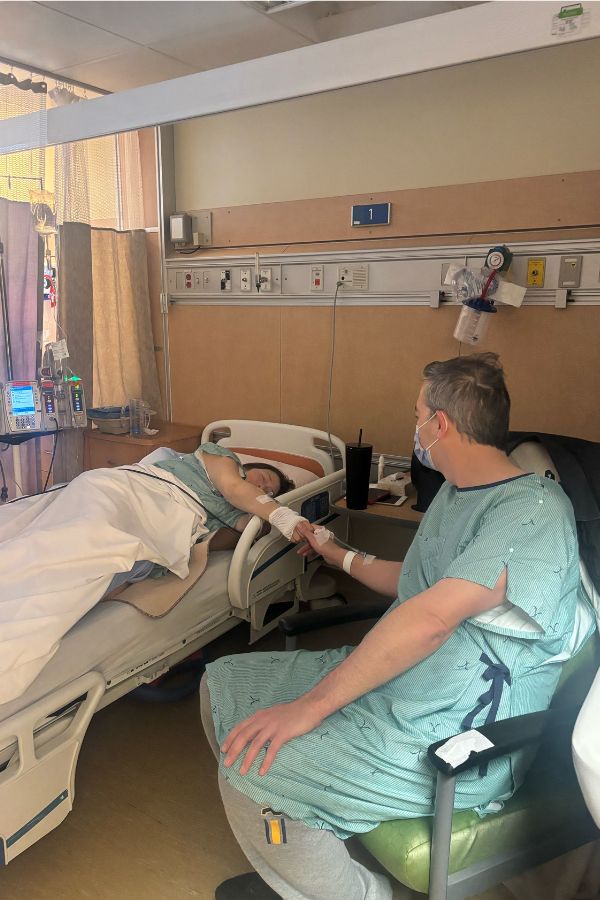
The transplant was performed at the Ajmera Transplant Centre, part of UHN’s Toronto General Hospital.
It was a success.
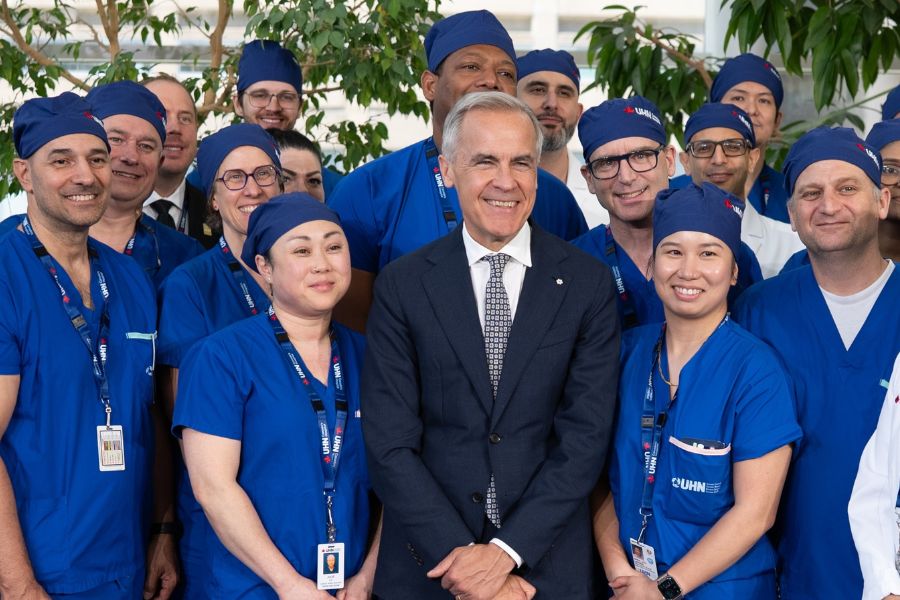
UHN’s Ajmera Transplant Centre is the largest and most successful transplant program in North America, and one of the top three transplant research centres in the world. More than 20% of all transplants in Canada are performed here.
But a successful transplant is about much more than what happens in the operating room. Part of being a world-leading transplant centre means caring for the whole person.
The transplant journey can be emotionally and psychologically challenging for both donors and recipients, requiring support long before surgery and throughout recovery.
Before the transplant, Mike and his friend decided to keep some distance as he moved through the donor assessment process. While they stayed in touch through text messages and phone calls, they chose not to see each other in person. This gave them space to navigate the uncertainty and emotions that came with the journey.
UHN support teams
To support him through this process, Mike was paired with a social worker from UHN’s Transplant Psychosocial Team.
While the transplant was a success, the emotional impact of the experience didn’t end when the surgery was over. Following the transplant, he found himself struggling with an unexpected feeling.
He was uncomfortable with the attention that came with being an organ donor.
“I didn’t want to make a big deal about this on social media, or make it seem like I donated for recognition – I just wanted to help my friend,” said Mike.
“I felt a lot of discomfort around that.”
Through UHN’s transplant social workers, spiritual care team and peer support groups, Mike learned that these feelings were not only normal but remarkably common among living donors.
The support helped him process the experience, navigate his recovery and adjust to the evolving relationship he shared with his friend after the transplant.
Slowly, that discomfort was replaced with a new outlook on his experience.
As of December 31, 2025, 4,344 Canadians were waiting for an organ transplant.
A story worth sharing
While recovering, Mike connected with other patients and families whose lives had been touched by kidney disease.
Some shared stories of gratitude after receiving a transplant.
Others were still waiting and hoping for a donor.
Those conversations stayed with him.
As someone with a background in communications and storytelling, Mike began thinking about how he could use his own experience to raise awareness about living organ donation and encourage others to consider becoming donors.
Today, he shares his story because he knows it has the power to change someone’s life. Just like it did for his friend.
“This whole process was eye-opening,” says Mike. “Spending three days in the hospital and hearing everyone else’s stories made me realize the impact kidney disease has on so many people and families. I’m incredibly grateful everything went the way it did. And I owe a huge thank you to the incredible team at UHN.”
Changing the future of living organ donation
The experience also made Mike realize that not everyone has a network they can turn to for help.
Not everyone knows how to start those conversations. Not everyone feels comfortable sharing deeply personal health information. And not everyone has equal access to the tools, resources and support that can help connect them with a living donor.
Yet for many patients, living organ donation offers more than a shorter wait.
It can mean receiving a transplant before it is too late.
“Despite advances in transplantation, the need for organs continues to far exceed the supply available,” said Dr. Sunita Singh, transplant nephrologist with UHN’s Centre for Living Organ Donation. “For many patients, a living donor transplant offers the best chance of receiving a new organ before their condition worsens.”
As of December 31, 2025, 4,344 Canadians were waiting for an organ transplant. That same year, 678 people were removed from transplant waitlists, and nearly one-third died while waiting.
That gap is what UHN’s Centre for Living Organ Donation (CLOD) is working to close.
Created in 2018, the Centre was established to improve access to living organ donation for people in need of a kidney or liver transplant, while supporting those who want to make this transformative gift.
Through education, advocacy, research and patient support, the Centre helps remove barriers to living donation and connect more patients with life-saving transplant opportunities.
For patients searching for their own “earth angel,” that support can make all the difference.
For Mike, it represents something powerful: a future where fewer patients have to navigate the search for a living donor alone, and where more stories have a hopeful outcome.
After all, he knows better than most that a single social media post, seen at just the right moment, can change a life.
Constantine Yorkville Run in support of UHN
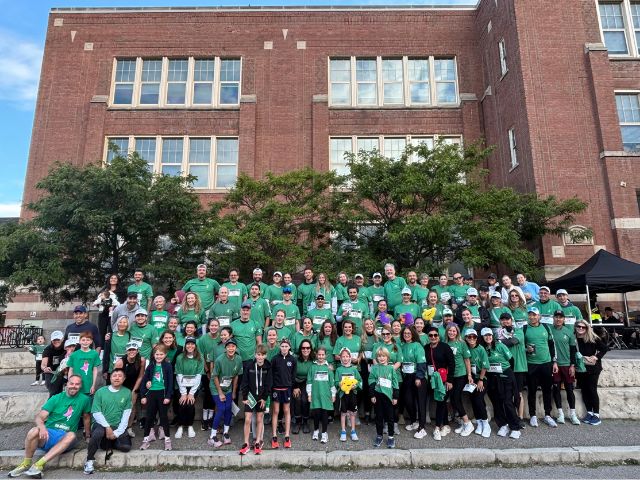
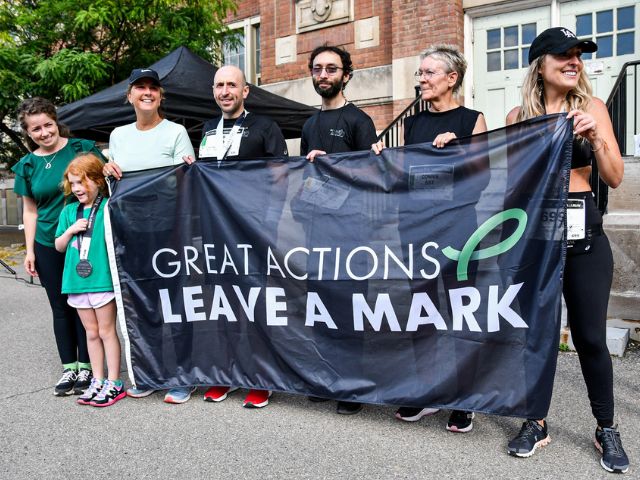
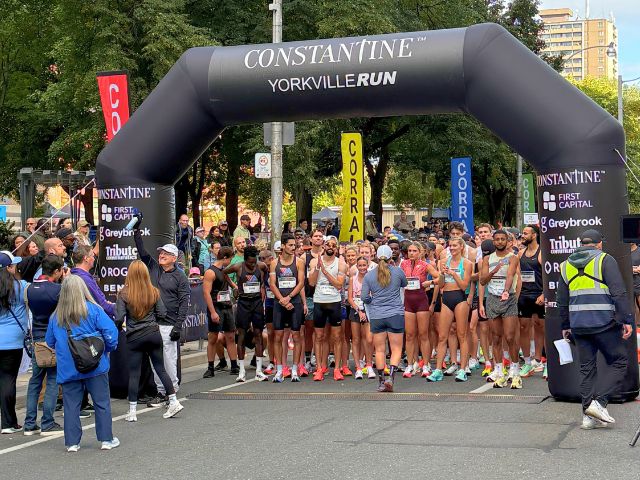
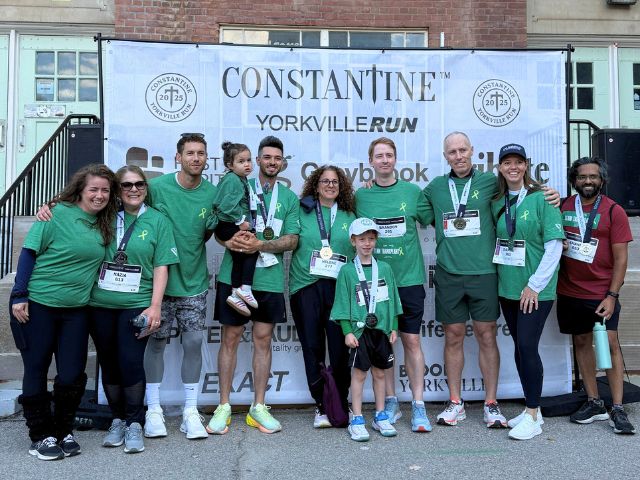
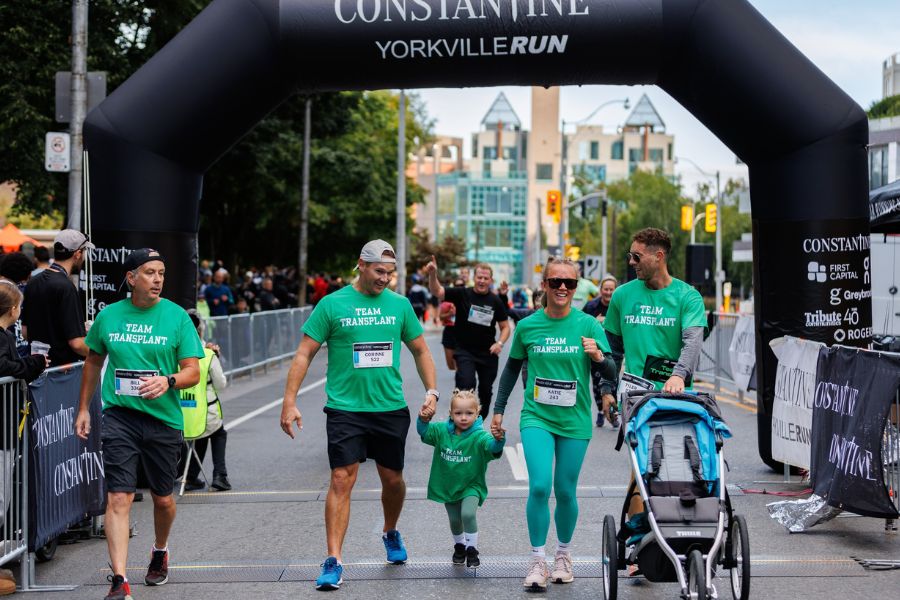
Today, Mike is helping raise awareness and support for living organ donation by participating in the Constantine Yorkville Run in support of UHN Foundation. Funds raised through the event will support the Centre for Living Organ Donation, helping more patients access the education, resources and support they need on the path to a life-saving transplant.
Interested in learning more about living organ donation? Visit the Centre for Living Organ Donation at UHN to explore how you can make a life-changing impact.