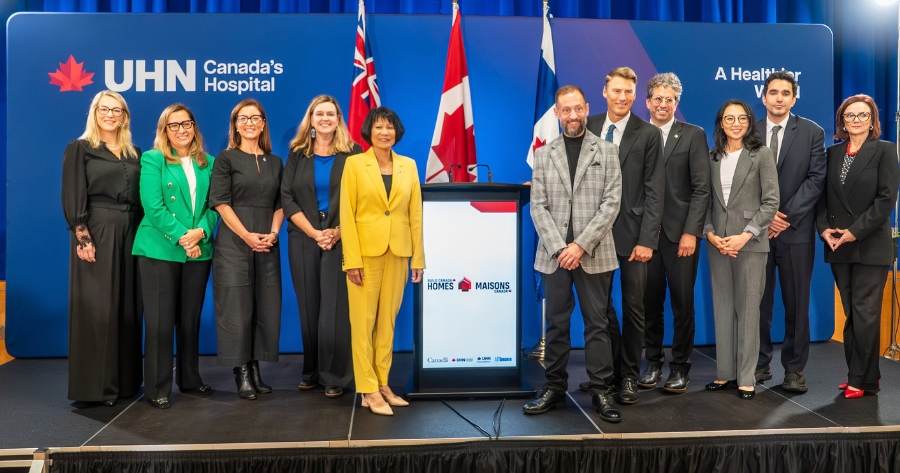
University Health Network (UHN) is expanding Canada’s first hospital-led social medicine housing initiative, a pioneering model of prescribable housing that recognizes access to stable homes as a critical social determinant of health.
Building on the success of Dunn House and the in-development Spring House, the model’s first two phases, UHN’s social medicine housing initiative aims to create approximately 200 additional supportive and transitional housing units for medically and socially complex patients, with integrated health care and community supports.
Supportive housing reduces hospital visits and improves patient outcomes
“Investing in the Dunn House model is critical to solving the housing crisis across the continuum,” said Gregor Robertson, Minister of Housing and Infrastructure and Minister responsible for Pacific Economic Development Canada, at a press conference.
“This investment will deliver urgently needed supportive housing for those who need it most. When we pair innovation with compassion, we create homes that strengthen communities and provide vulnerable Canadians with the stability and care they deserve.”

The announcement marks the next phase in scaling a model, developed at UHN’s Gattuso Centre for Social Medicine, that has already demonstrated measurable impacts for residents and the health care system.
Since opening its doors in 2024, residents at Dunn House had a 52 per cent reduction in UHN emergency department visits and a 79 per cent drop in prolonged hospital stays. This impact resulted in an estimated $2.1 million health care cost savings.
“At UHN’s Gattuso Centre for Social Medicine, we have demonstrated what is possible when housing, health care and social supports come together around the needs of patients,” said Dr. Kevin Smith, President and CEO of UHN.
“What began as Canada’s first hospital-led supportive housing initiative has evolved into a proven model of care, made possible through the commitment of our government and community partners, and the generosity of our Foundation.”
Investments by federal and municipal partners
Build Canada Homes, the federal agency responsible for developing affordable housing, is investing $25 million to build 80 units.
“Dunn House has shown what is possible when housing and health care work together,” said Ana Bailão, CEO of Build Canada Homes.
“Through this investment, Build Canada Homes is helping scale a proven model that creates supportive homes, improves outcomes for residents, and delivers lasting impact for communities.”
A $20 million philanthropic donation from the UHN Foundation and $19 million in capital funding from the City of Toronto will support the broader build to reach 200 new units.
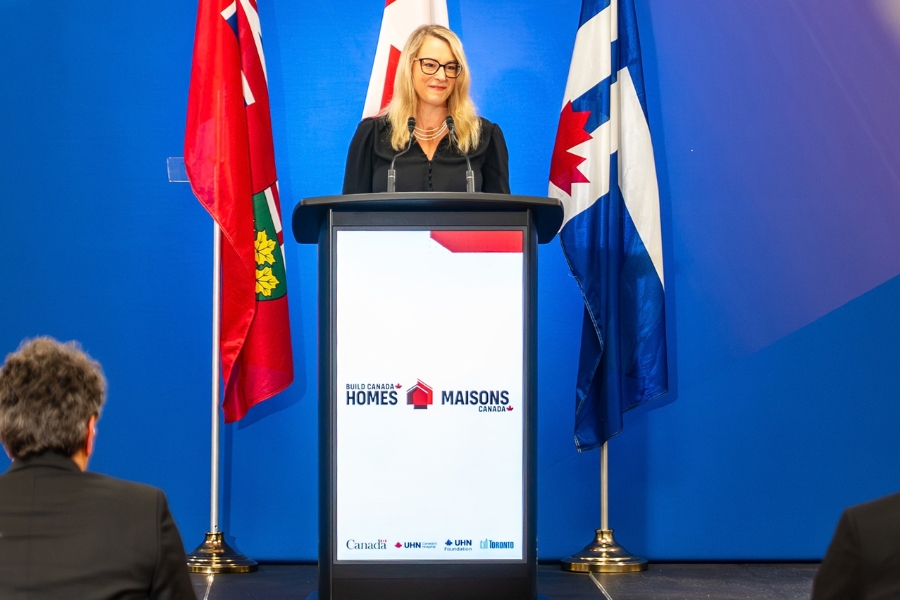
With the latest investments, UHN has announced 300 housing units.
“At UHN Foundation, the most meaningful measure of impact is found in the stories of patients and their families,” said Julie Quenneville, CEO of the UHN Foundation. “Their lives have been transformed through care made possible by generosity.
“The social medicine housing initiative gives us the opportunity to create more of those stories, not through a single treatment or technology, but by recognizing that a stable home can be fundamental to a person’s health.
Housing as health care in action
UHN’s social medicine housing initiative was built on the notion that health doesn’t begin in a hospital — it starts with stability, community and a safe home.
By addressing the root causes of poor health, the social medicine housing model aims to improve patient outcomes, reduce hospital visits and admissions, and create a more sustainable health care system.
Residents receive rent-geared-to-income units in addition to daily meals, social and community integration services, mental health support, harm reduction services, personal support worker services and additional on-site supports.
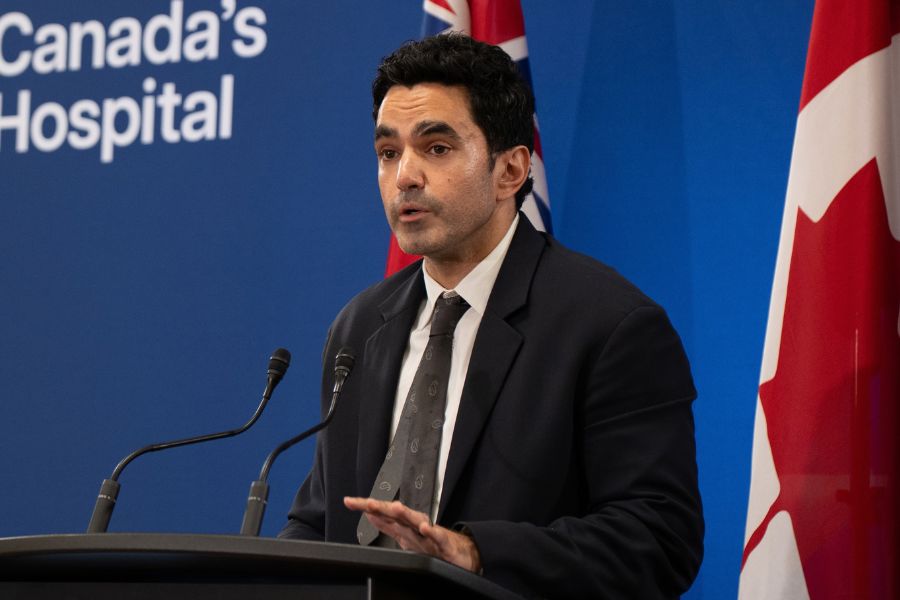
“Dunn House proved something simple: housing is health care,” said Dr. Andrew Boozary, Founding Executive Director of the Gattuso Centre for Social Medicine.
“This investment takes the social medicine housing initiative and scales it to more than 200 new homes — the largest advancement in housing and health care in the country.”
The new developments in the social medicine housing initiative will take the next bold step in scaling the model, while continuing to focus on how stable housing, food security and access to care all lay the foundation for good health.